Project management (cert.) (Boxes):
3 Provider


Immediately to the right training
Innere Margarethenstrasse 5
4051 Basel

 Download info
 Strengths:
The Institute for Vocational Education and Continuing Education, Further Training IBAW offers high-quality and practical training programs for private individuals and companies/institutions throughout Switzerland.
Download info
Schöntalstrasse 7
9244 Niederuzwil
Strengths:
Strong regional ties, top-notch infrastructure, instructors with real-world experience, blended learning approach


Schools with certified educational counseling

Education location / Schools Buchs
Questions and answers
What project management certifications are available?
There are various certificates and certifications in project management. They differ in terms of target audience, prerequisites, exams, and whether they are internationally or nationally oriented.
Some of the well-known offerings include:
- IPMA: Certifications at Levels A through D, with varying requirements for competence and experience
- PMI: including CAPM for beginners and PMP for experienced project management professionals
- HERMES: A Swiss method for project management, particularly in specific areas such as administration and IT; there are also HERMES certifications
- Agile certifications: for example, for Scrum or SAFe
- School and Provider Certificates: Certificates issued by continuing education institutions, each with its own specific format
Which project management certification is right for you depends on whether you want to learn the basics, validate your practical experience, or earn an internationally recognized certification.
What are the drawbacks of continuing education, further training in project management?
In addition to offering career opportunities, continuing education, further training in project management also requires a certain amount of time and effort. Furthermore, the programs vary greatly, so it is important to carefully evaluate your options to find the right one.
Possible challenges include:
- additional time commitment in addition to work and personal life
- Costs for the course, exam, and, if applicable, course materials
- Different requirements depending on the certification
- exams that are sometimes challenging
- many different methods and certification systems
- A degree alone is no substitute for practical project experience
Conclusion:
Continuing education, further training is especially worthwhile if it aligns with your career goals and you can apply what you’ve learned in practice. Before enrolling, you should therefore compare the degree, prerequisites, costs, and time commitment.
What is the difference between IPMA, PMI, and HERMES?
IPMA and PMI are international certification systems, while HERMES is primarily used in Switzerland as a standardized project management method. The programs therefore differ in their purpose and prerequisites.
The main differences:
- IPMA: assesses project management competencies across four levels and takes into account different experience requirements depending on the level.
- PMI: offers various certifications. The PMP certification is designed for experienced project management professionals, while CAPM serves as an entry-level certification.
- HERMES: is a Swiss project management method with defined roles, procedures, and deliverables; it is used, among other areas, in the fields of administration and IT.
- Agile certifications: These focus, for example, on Scrum, SAFe, or other agile methodologies.
IPMA and PMI are primarily relevant as certification systems, while HERMES is a specific project management method. When making your choice, you should therefore consider your professional experience, industry, and career goals.
What career opportunities does a project management certificate offer?
A project management certificate can help you demonstrate your methodological knowledge of project work. However, the types of professional roles you can pursue with this certificate also depend on your work experience, education, industry, and previous responsibilities.
Possible fields of work include, for example:
- Project Assistance and Project Coordination
- Project Collaboration
- Subproject Management
- Project management
- IT, Construction, or Technical Project Management
- PMO
- Process and Organizational Management
- Agile project work, for example as a Scrum Master
- Change and Transformation Projects
A certificate does not automatically lead to a specific role or leadership position. Particularly for roles such as project manager, senior manager, or program manager, practical experience and industry-specific expertise are usually important in addition to continuing education, further training.
Read moreBenefits of the Training Program
What do I learn in a project management course?
In a project management training program, you'll learn how to plan, coordinate, manage, and complete projects in a structured way. The specific topics covered depend on the course and the degree or certification you're pursuing.
Typical contents are
- Project Objectives, Project Scope, and Project Organization
- Planning Schedules, Resources, and Costs
- Project Management and Progress Monitoring
- Risk and quality management
- Communication with Project Teams and Stakeholders
- Traditional, agile, or hybrid project management methods
- Documentation, Project Completion, and Evaluation
Conclusion:
A project management training program primarily teaches you methods and tools for structured project work. Depending on the course, you can also specialize in specific methods such as IPMA, PMI, HERMES, or agile approaches.
Read more about the5 Facts About Vocational Training.
How long does continuing education in project management last?
The duration of a project management continuing education program ranges from a few days for compact introductory courses to several months for more comprehensive programs or preparation for certification. The exact duration depends on the certification, the provider, and the learning model.
Typical differences include:
- Introductory courses: a few days to several weeks
- Certificate programs: several weeks to several months
- Preparation for external certifications: depending on prerequisites, experience, and exam objectives
- CAS in Project Management: a program lasting several months and to be considered a standalone continuing education program at the university level
- MAS: significantly more comprehensive and not equivalent to a traditional project management certification
If you want to learn the basics as quickly as possible, short courses are a good option. For a comprehensive qualification or external certification, you should plan to spend more time on classes, self-study, and, if necessary, exam preparation.
How much does a project manager or project leader earn with a project management certification?
Salary as a project manager or project leader depends on various factors. These include, in particular, professional experience, the industry, the region, the size of the project, and the scope of responsibility. A project management certificate can complement one’s professional qualifications and improve career opportunities, but it does not guarantee a specific salary.
Factors that influence wages include, for example:
- Work Experience: Experienced project managers with a proven track record in project management typically earn more than those just starting out in their careers.
- Certification: Recognized certifications such as IPMA, PMI, or HERMES can strengthen your qualifications.
- Industry: Wage levels vary, for example, between the IT, construction, manufacturing, administrative, and financial sectors.
- Region: Salaries may vary depending on the work location and regional wage levels.
- Area of Responsibility: Managing complex projects, larger teams, or substantial budgets can affect salary levels.
- Function: Project assistance, project coordination, subproject management, and senior project management are associated with different salary levels.
A project management certification can be an important step toward professional development and a career in project management. However, practical experience, technical skills, and the level of responsibility assumed are the key factors in actual salary growth. Anyone aiming for a higher salary in project management over the long term should therefore not only pursue a recognized certification but also specifically build up project experience and leadership skills.
Who is project management continuing education, further training suitable for?
A project management certificate is ideal for professionals who work on projects, coordinate them, or would like to take on more responsibility in projects in the future. The right continuing education, further training program depends on your previous experience and your career goals.
A project management certificate is particularly useful for:
- Project Staff and Project Coordinators
- aspiring project managers
- Specialists and managers with project responsibility
- People working in IT, construction, manufacturing, administration, marketing, or the service industry
- Professionals who would like to systematize their existing project management knowledge
- Individuals seeking a specific certification, such as IPMA or PMI
Depending on the program, a basic course—which doesn't require extensive prior knowledge—is sufficient to get started. Some more advanced certifications require professional experience or hands-on project experience.
More aboutDuration and Costslearn
How much does a project management certification cost?
The cost of a project management certificate varies significantly depending on the provider, scope, and type of program. A short introductory course costs considerably less than a comprehensive certificate program or a university continuing education program.
Costs may include, among other things:
- Course or Program Fees
- Examination fees
- Costs for Teaching Materials and Study Guides
- Fees for External Certifications
- additional costs for coaching or test preparation
- Travel and Lodging Expenses for In-Person Classes
Compare not only the course price, but also the scope of services included and any exam fees. For external certifications such as PMI or IPMA, additional exam and certification costs may apply in addition to the preparation costs.
What are the requirements for a project management certification?
The requirements for a project management certification vary widely depending on the provider and the type of certification. While many introductory courses can be taken without any prior knowledge, more advanced certifications sometimes require project management experience.
Depending on the offer, the following may be relevant, for example:
- No specific prerequisites for introductory courses
- Work experience or hands-on project work
- specific training or educational qualifications
- Completed continuing education, further training or preparatory courses
- Proven project management experience
- Specific Requirements for an External Audit
Always check the eligibility requirements for the specific certification. In particular, the requirements for IPMA and PMI certifications can be significantly higher than those for a traditional continuing education course.
What are the benefits of a project management certificate?
A project management certificate can help you expand your knowledge of structured project planning and management and demonstrate it to employers. The specific benefits depend on the type of certification and your professional field.
Possible benefits include:
- A more structured approach to projects
- a better understanding of project management methods
- Greater certainty in planning and coordination
- better preparation for project leadership
- Support for Professional Development
- Demonstration of specific project management skills
- methodological knowledge applicable across industries
- Opportunity to specialize in traditional or agile methods
Conclusion:
A project management certificate is particularly valuable if you can apply the methods you’ve learned directly in your professional practice and if the program you choose aligns with your current level of experience and career goals.
Read more aboutInformation from the job postings.
What continuing education opportunities are available after earning a project management certificate?
After earning a project management certificate, you can build on your knowledge—depending on your career goals—through advanced certification, a specialization, or continuing education at a university. Which option makes the most sense depends on your previous degree and your project experience.
Possible next steps include:
- Advanced IPMA or PMI certification
- Specialization in Agile Methods
- In-depth study of HERMES or other project management methods
- Continuing education in Leadership, Change Management, or Process Management
- CAS in Project Management or Related Fields
- Advanced university-level continuing education programs such as DAS or MAS
A project management certificate can therefore serve as a stepping stone to further specialization. For the next step, you should first and foremost consider which qualification aligns with your professional experience to date and your desired field of work.
What is the difference between a project management certificate and a CAS?
A project management certificate can refer to a short course, a certificate program, or an external certification. A CAS (Certificate of Advanced Studies), on the other hand, is a continuing education program at a university with a defined scope and academic context.
The main differences:
- Project management certifications vary depending on the provider and certification system
- A CAS is offered by a university or other higher education institution
- CAS programs are generally more comprehensive than short certificate courses
- External certifications such as IPMA or PMI follow their own admission and examination rules
- For this reason, the term “certificate” alone says little about its scope and recognition
If you’re primarily interested in learning practical project management methods, a certificate program might be a good fit. A CAS is a standalone continuing education program at a university and should not simply be classified as a “higher-level project management certificate.”
Read more aboutSkills and competencieswith a Project Management Certificate
What is PMP certification?
The Project Management Institute’s (PMI) PMP (Project Management Professional) certification is an international project management certification for individuals with practical experience in managing projects. It is therefore not equivalent to a basic introductory course or a project management certificate earned through school.
Depending on the educational path, the prerequisites include several years of experience in project management as well as 35 hours of project management training. The exact requirements depend on the applicant's educational background and professional experience.
- several years of project experience, depending on educational background
- defined training requirements
- 35 hours of project management training or an equivalent alternative
- Application and Review by PMI
- certification valid internationally
Conclusion:The PMP certification is particularly well-suited for experienced project professionals. For beginners, other project management courses or certifications are a better fit.
What else is there forother degrees?
Tips, tests & info on project management (cert.)

 Error found? -

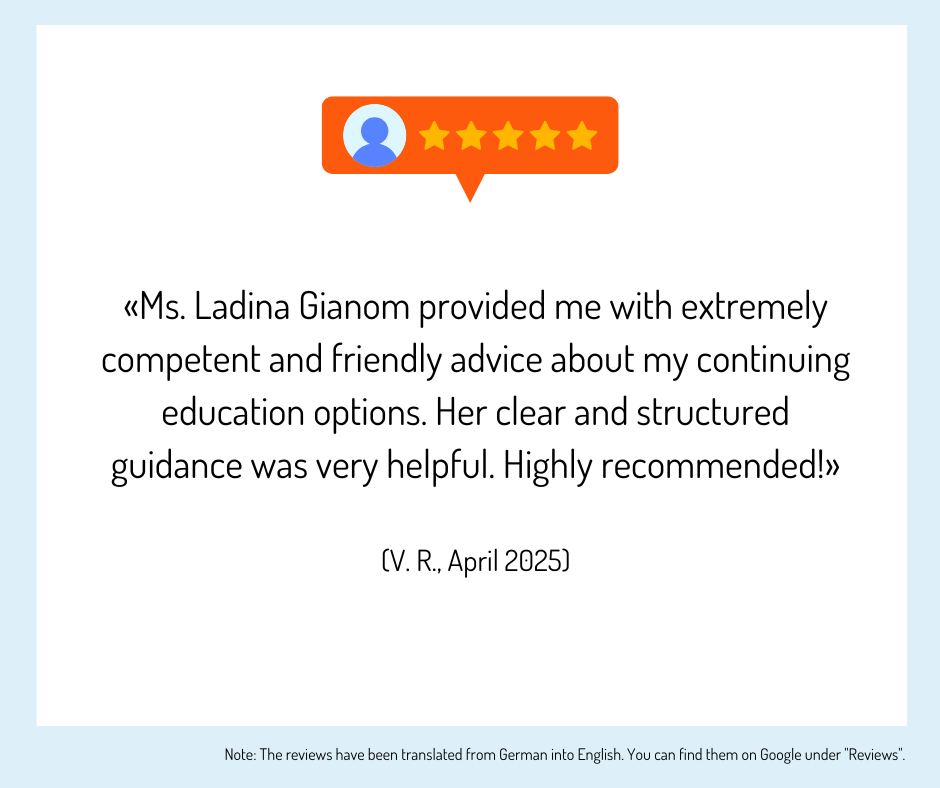
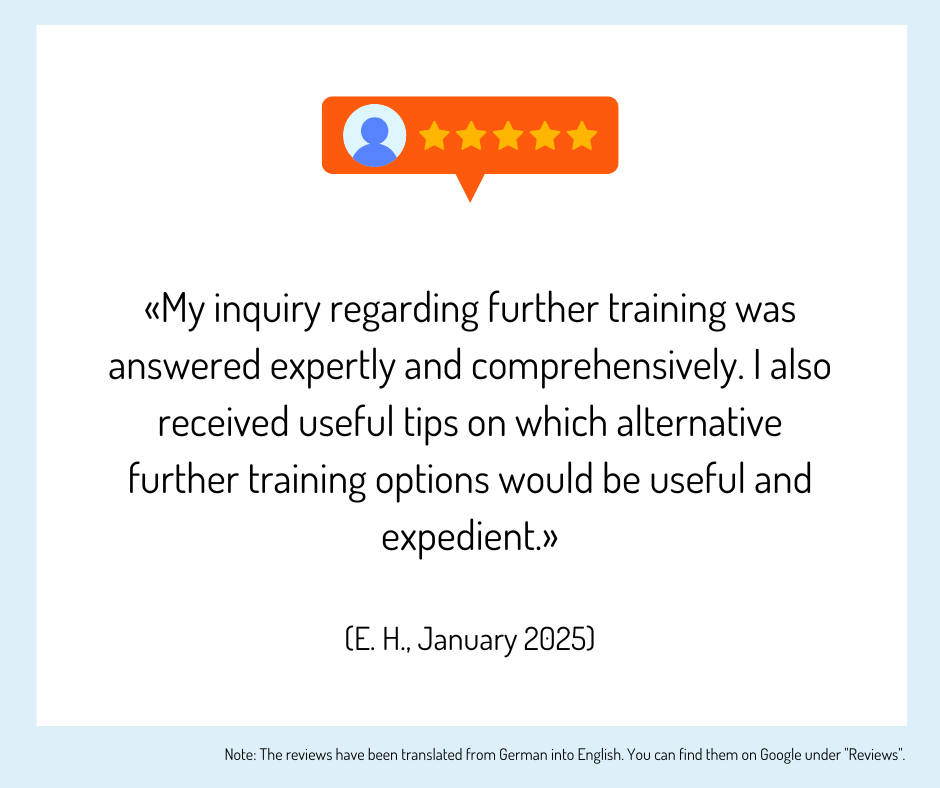
Experiences, evaluations and opinions on training / further education
Haven't found the right training or further education yet? Benefit from educational advice now!
Further training is not only important in order to maintain or increase professional attractiveness, investing in training or further training is still the most efficient way to increase the chances of a pay rise.
The Swiss education system offers a wide range of individual training and further education opportunities - depending on your personal level of education, professional experience and educational goals.
Choosing the right educational offer is not easy for many prospective students.
Which training and further education is the right one for my path?
Our education advisory team will guide you through the "education jungle", providing specific input and relevant background information to help you choose the right offer.
Your advantages:
You will receive
- Suggestions for suitable courses, seminars or training programs based on the information you provide in the questionnaire
- An overview of the different levels and types of education
- Information about the Swiss education system
We offer our educational counseling in the following languages on request: French, Italian, English
Register now and concretize your training plans.



Attraktive Services für Swiss Post Mitarbeitende
Kostenlose Services
» Bildungsberatung (Wert: CHF 150.–)
Bildungs- und Businessratgeber (Wert: CHF 175.–)
» Rabatte
Attraktive Rabattierungen seitens der Bildungsanbieter.
Massgeschneiderte Bildungsangebote
Ohne grossen Zeitaufwand den besten Trainer, Coach oder Schulungsanbieter finden
Bildungsangebot Schweiz
Aus über 700 Bildungsanbietern das richtige Bildungsangebot finden

